Showing posts with label gay literature. Show all posts

Saturday, April 2, 2016

Rainbow Snippets - A Shared Love

This snippet is from A Shared Love, the final book in the Spartan Love arc.

A dark whirlwind swept around him, snapping at his legs. Theron barely swung in time to drive the creature off, sadly without doing any damage of his own. His heart thumped harshly. He'd almost been hamstrung. If he'd been any slower, he would have provided the beast with dinner, or at the very least been crippled for life.

Small branches crashed, giving way under its solid bulk. A low snarl reverberated through the night-dark air, allowing Theron to track the creature's return path. He turned with it, every sense bent on keeping him alive.


For more Rainbow Snippets go to the Facebook group.

Sunday, January 25, 2015

The House of Dionysus

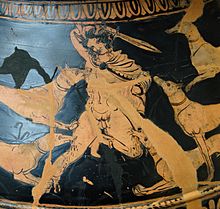
Dionysus and the satyr
Lisa Henry, JP Kenwood and I have created a new group on Goodreads for the discussion of m/m set against the backdrop of the Greco-Roman world.

We are entertaining questions about our stories and the ancient world, Classical History in particular.

Please drop by The House of Dionysus and chat.

Saturday, November 29, 2014

Body Language Is Free on Smashwords

Body Language takes place in Lydia—a kingdom in Asia Minor (now part of modern Turkey) that was conquered by Cyrus the Great during the 6th century BC and became part of the Persian Empire.

Years later, Lykos, the son of the king of the Thracian city-state, Aenus, is travelling incognito through the conquered province. To avoid arousing questions as to why he is there, he is only accompanied by the Persian, Narses, a friend of his father. Hearing cries for help, the two men intervene. They are too late to save a merchant and his slave, but they arrive in time to prevent bandits slaying the third member of the party.

Kas recently lost his family and was grateful to be travelling under the protection of Tahmasp. Now the merchant is dead, his future is once more under threat. He would like nothing better than to remain with the handsome warrior, but how can he explain that to a man who speaks little but Greek?

Saturday, June 28, 2014

History, Slavery and He Is Worthy by Lisa Henry

It's my pleasure to welcome Lisa Henry the author of He Is Worthy, a m/m story set in Imperial Rome. One of the characters is a Germanic captive and slave. (Sorry, Aenor! Bructeri, not German.)

History, Slavery, and He is Worthy.

I’ve always been drawn to historical fiction.

History is every story ever told, after all, and people have been motivated by the same things since the beginning of time: greed, love, ambition, lust. In that sense, history is only the window dressing. It’s us, it’s always us, whatever silly clothes we’re wearing.

But that’s also an oversimplification, because people from different time periods also have fundamentally different philosophies. In the past, people could go to an arena and watch other people get ripped apart by wild animals. Great entertainment. Tell you what, I’ll save the seats. Bring the kids!

Sometimes, the challenge in writing historical fiction is in taking those very foreign beliefs, stuffing them in characters, and hoping readers will still give those characters a chance. The two big issues I faced when I was writing my historical He is Worthy, set in Imperial Rome, were the age of consent, and slavery.

In Ancient Rome, a boy was considered a man at fourteen. It wasn’t uncommon for girls to marry at twelve or thirteen. In modern society we consider that abhorrent, and rightly so. But in most ancient societies the same standard does not apply. In fact, it took until the Victorian era for “childhood” to be romanticised as a time of innocence and purity. And then, only for the emerging middle classes. Working class kids? Get ’em down the mines or up the chimneys while they’re still small enough to fit.

Aenor, one of my main characters in He is Worthy, is chosen to be a pleasure slave for Nero. He’s nineteen; he could still be a boy by our definition, but certainly not by Nero’s. So I made his age something to be remarked upon, something to be unhappy about.

The master sighed, narrowing his eyes at Aenor. “And make him . . .” He waved his hand. “He’s too old for pretty. Make him look strong. He’s hardly a keeper, but I’m sure he can put on a good show.”

The age of consent difficulty neatly sidestepped, I then turned to the issue of slavery. The Roman Empire was built on military expansion and the acquisition of slaves. Slaves were forbidden from wearing uniforms, it’s said, because if they looked around and realised their superior numbers, they could easily overthrow their Roman masters.

Slavery in the ancient world was not seen as a moral issue. It followed one rule only: might is right. People weren’t made slaves because of ethnicity or some of the more ludicrous pseudo-scientific theories thrown around in the 1800s that basically justified slavery as white is right.

Aenor, a Bructeri tribesman, is a slave because he and his cousins ran afoul of some Roman legionaries. Aenor hates Romans, but he hated them long before they enslaved him. And while his enslavement is unjust – Aenor committed no crime – Aenor certainly never rails against the institution of slavery. A world without slavery would be a totally foreign concept to him, as it would be for any occupant of Ancient Rome.

One thing I wanted to do in He is Worthy was to show that there was no standard way of treating slaves in Imperial Rome. Many slaves were educated, wealthy, and dressed as well as their masters. Aenor initially mistakes such a slave, Callistus, as his master. Many slaves, of course, were brutalised. The pleasure slave Nero pampers as his favourite – Sporus, a real historical figure – reminded Nero so much of his dead wife that he castrated the boy and then married him.

At the other end of the scale are the slaves owned by my other main character, Novius Senna. Senna is a Roman nobleman.

[Senna] told himself he didn’t enjoy pointless cruelty, not even against slaves. His father had raised him to treat slaves fairly. They weren’t cheap, after all, especially the pretty ones. Why buy them just to sacrifice them to strange pleasures? To use a slave to the point of injury or death made bad economic sense.

But there’s more to Senna that the economic rationalisation:

The children in the atrium belonged to the household slaves. They were slaves themselves. They played in the atrium because Senna didn’t care, or pretended not to care. He liked to hear the sound of laughter filtering through the house, even though Felix, his secretary, always shooed the children away when he found them there.
Get away with you, little monkeys! If the master finds you here, he will have you whipped!
Lies.

Slavery, in Ancient Rome, could be inherited. If your mother was a slave, then you were a slave. It could also be brought about by war, or imposed as a punishment by the judicial system. In a world where everyone’s life could be short and brutal, to be a slave was not necessarily a worse fate than any other. Children were sometimes left on the side of the street to be claimed as slaves. The lucky ones would be fed, housed, educated and valued as investments. The unlucky? They were probably no worse off than living in the slums anyway.

Slavery may be repugnant to our modern ideology – although let’s not pretend that it doesn’t exist anymore – but the Romans weren’t the first, or the last, to build an empire on it. In the scope of the millennia, it’s probably more unusual to live in a world where most people believe in crazy things like personal freedom and human rights. 


Most importantly when it comes to history, I think that we can’t judge it from our modern standards. It’s not that simple. What we can do, though, is learn from history. Always.  

Thank you for joining me today, Lisa! As a bit of a history geek, I enjoy learning more about history from fellow enthusiasts.

But don't think that Lisa only writes historical fiction such as He Is Worthy. Dark Space, one of my favorites she has written, is a SciFi. And of course, there is The Island, a contemporary.
Saturday, June 14, 2014

Spartan Myths - Spartan Women Had to Dress like Men to Catch a Man

Lycurgus urged the Spartan girls to engage in wrestling.
Here they urge the boys to fight.
A bit of malarkey I ran into the other day, insisted that Spartan wedding traditions were proof that Spartans were gay. On the surface, that kind of statement is absurd.

Nothing could be further from the truth. While Spartans did practice pederasty, which most people point to as their main proof of homosexuality, the practice in Sparta was purely platonic mentorship. Unlike Crete or Athens where the practice was often sexual.

In Sparta, the older man, or mentor, was considered to stand in as a foster father for the youth. They did not court the boys, as occurred elsewhere. Instead, the boy asked them to be their mentor. As a foster father, any sexual activity between the man and boy would be tantamount to incest and punished as such. The pair would be required to commit suicide or go into exile to erase the stain on Sparta's honor and to a lesser degree, their own.

This prohibition extended to any males seeking the arms of another man. Possibly because Spartans were slowly dying out and needed to increase their population to refill their ranks. Either way, the Spartans were some of the more homophobic people in ancient Greece.

Now for that wedding tradition.

Young women in Sparta had to be at least 20 years old to wed. While in the rest of Greece thirteen-year-old girls were routinely given to men up to more than twice their age. The Spartan maids cut their hair and dressed as men before going to their own bed on their wedding night. Not as one person postulated, because the Spartan men couldn't stand to touch a woman.

The young warrior had to sneak into the bed with his new wife and be gone before dawn the next day. In fact, that was the pattern of the early years of their marriage, until at age 30 he could have a home other than the barracks. Then the couple could live together for the rest of their lives.

The sneaking around was good practice for a warrior. Men who were caught visiting their wives were likely teased for not being stealthy enough, not for desiring a woman.

The Spartans were surrounded by a culture, and had probably shared the same culture at one point, that believed marriage by capture to be the norm. So much so that the tale of Hades kidnapping Persephone was a myth designed to legitimize the practice and give it the godly stamp of approval.

The practice of cutting the woman's hair may have started as a way to prevent a bride from being kidnapped on the eve of her wedding. Later, this practice likely became a rite of passage. A visible sign that she had left childhood behind, as such she would have been proud of her newly shorn hair. It also allowed men to tell at a glance who was recently wed (her hair would be short for a couple of years) and they wouldn't court another man's wife.


As you can see, putting a modern spin on an ancient and often misunderstood culture while ignoring what the people themselves did or said about the subject is misleading to say the least.

Wednesday, November 27, 2013

Review - Fun and Games with Rudolph

Amazon buy link
Four and a half out of five stars!

Deanna Wadsworth delivers another one of her quirky Naughty North Pole stories. A mix of traditional, contemporary and fairy tale/fantasy elements that is a fun romp through a winter wonderland that is uniquely hers.
Lars is a fun loving elf whose goal in life is to find out what flavor every elf at the North Pole is. Don't know what I mean? Well, let's just say when he's very happy, Lars is peanut butter. And such a busy man never does repeats.
He spends much of his free time chatting with MikeLikes69 on Elf4Elf, an app that elves, being horny little bastards, use for hook ups. Lars surprises himself to find that he'd rather chat than use the app in the pursuit of his life goal.
Lars and Mike have two rules: No strings and No face photos. But other than that anything goes. Sexting, photos and videos of each other in action. However, as often as Lars asks, Mike won't tell him what flavor he is and Lars has never been able to guess.
Then one night caught up in a fantasy they had both built, Lars asks for the equivalent of a face shot. He immediately panics, but Mike doesn't lose a beat, even promises to deliver the next night. And in true skittish masculine behavior, is never seen again.
Being a department head at the North Pole, the last week before Christmas is usually the most wonderful time of the year, but this year Lars could star as Scrooge in the North Pole's production of A Christmas Carol.
Finally, even Santa seems to have had enough and sends him on an errand to deliver a package to Rudolph the cranky old hermit who lives on the frozen backside of BFE. The package must be there by midnight, and since he had to go by ground bourn sleigh, he had to leave before Santa's launch and Ms Santa's sex party.
As time outs went, Santa managed to nail Lars' two favorite events of the year.
Now Lars is stuck out in the cold as a blizzard prepares to make this either a Christmas tragedy or a Christmas miracle.

I love her slightly twisted sense of humor. If you want a bit of angst with your chuckles, this is definitely the story for you.

Wednesday, September 28, 2011

Defining Gay Romance, Porn Fiction, and Gay Erotica

 Hi, this is Gavin Atlas, and Kayla is allowing me to respond to her post about m/m romance vs. gay romance as well as some of the great comments she got on that post.  How I view this may not clear anything up, but here goes.

First, why bother?  Here’s why: Defining genres and sub-genres is done to help readers find books they’d like while helping them avoid what they wouldn’t.  This usually generates sales.  One of the publishers I write for, Excessica, tells the readers if a story will have an HEA, HFN, or ambiguous ending with the intention of limiting disappointment as much as possible.  Not that it always works, but it appears that both reviewers and general readers appreciate the tactic.  

DC Juris commented on Kayla’s post that m/m romance and gay romance are more alike than not.  I agree.  Although I’m not a publisher nor am I someone generally considered a romance writer,  from my training as an editor, publicist, and reviewer I can say that in publishing, to truly be a romance, there pretty much has to be a Happily Ever After ending—otherwise I suspect most (but not all) publishers would say it's not truly a romance.  Also, getting to that HEA is the primary conflict or goal of the story, not a subplot.  So no matter what subcategory of romance your story is placed in, I imagine the same bulwarks of the genre will have to be present. 

What Kayla noticed is that some readers are going to want to see gay relationships that are solidly built over time and portrayed as monogamous, and she labeled that as M/M romance.  Okay, sure. Why not?  I think that label would be helpful (or so I imagine) and if it's decided that "gay romance" is a story that still has an HEA ending but is more open to a variety of sexual situations, possibly more explicit on average, and less concerned with monogamy, then okay— that will help some readers find what they want or know what they want to avoid which, again, is probably the whole point of worrying over what belongs where.  

By the way, I don’t want to ignore the fact that for some, terms like “M/M erotica” or “Gay erotica” carry some socio-political connotations when I don’t think that was ever the intention.  What I’m imagining (and have heard) is that the term “M/M” denies the gay identity and is therefore inherently homophobic because it represents what the majority wants us to be like instead of what we are.  I’ve also heard the counter argument that “M/M” encompasses a much wider array of identities and is actually more inclusive than exclusory.  That sounds more plausible to me.   Personally, I have to say “Really?  Women (and men) who write about loving relationships between men and calling it ‘M/M romance’ are being insensitive and insulting?”  I can’t say the negative attitude towards the term “M/M” is 100% wrong, but if there is any truth that M/M romance is somehow bad for gay men, I haven’t seen it.  So for argument’s sake, let’s say both terms are positive ones and can be useful to readers, writers, and publishers. 

Defining genres sharply is never going to be a perfect system, especially for erotica authors and readers and, nearly to the same degree, for writers and readers of non-erotic romance.  As the internet shrinks the divide between author and reader, it’s become clear to writers that “squicks” and turn-ons are so individualized that what one person considers wonderful erotic romance is another person’s DNF trash.  Because a squick is usually such a strong gut reaction, readers are probably going to have more interest in avoiding something they don’t want to read in erotic fiction than, say, a cozy mystery or historical fiction.   So erotica authors have more landmines to navigate than writers in many other genres.  

This brings me to where D.C. Juris referred to sex writing where there is no romance “required, implied, or expected” as “Stroke Fiction”.  I’m going to call that “porn,” but it might also be called “erotica” or “literary erotica.”  Here’s why:  

I think it was author Lars Eighner who said something like the following:  "The goal of pretty much any other genre of fiction is to tell a story.  The goal of porn is to arouse the reader.” I think the difference between porn and erotica is that in erotica, you have to both tell a story and arouse the reader. 

Meanwhile, I think publisher Steve Berman once said that with literary fiction, the author is trying to "either enlighten the reader or move the reader emotionally" so for literary erotica, it would make sense if that meant the author needs to either enlighten the reader or move the reader emotionally as well as tell a story as well as arouse the reader.  (By the way, I agree with Erastes in her comment that the definition of “literature” keeps changing, and it can mean different things to everyone who uses the word.)

Here’s another asterisked observation:  I can really only speak as a short story writer, and I think the majority of readers would agree that for a romance to be successful, the relationship has to develop over time which means the author will want to show the connection grow steadily (or not so steadily) in a longer format like a novella or novel instead of a short story.  Meanwhile, porn stories are often brief encounters and, in my opinion, are more suited to short fiction instead of a novel.  

So there you have it:  “Porn,” “Erotica,” and “Literary Erotica” defined to the best of my ability with an attempt at how authors or publishers might divide “M/M romance” and “Gay romance” to guide readers toward what they want.  But wait, there’s more…

I suspect the main difference between who reads and writes "erotic romance" and who reads and writes "porn" may change, and here's why:  Magazines like Honcho, Mandate, and Torso used to be some of primary sources of gay porn fiction, and their customers were probably more interested in the photos than the fiction.  Though there were some all-story magazines, in general, these markets usually wanted stories shorter than 3000 words and got to the sex before 1000 words.  Yep. The goal was to arouse the reader and get him aroused quickly before he went back to the photos of “Falcon Video’s New Bottom Discovery”.   

Now I only wrote one story for the magazines before they began to shut down, and writers younger than me are going to have even less reason to write for readers who are mostly interested in naked pictures and want hot encounters instead of complete story arcs. While Advocate Men and Freshmen still want fiction, most readers and writers who want gay "porn stories" or “erotica” will now go to anthologies from editors like Neil Plakcy, Shane Allison, Jerry Wheeler, Richard Labonte, Cecilia Tan, Fred Towers, and so forth. (These editors and others are developing niches so you’ll know which ones to pick up if you want something more romantic, something more raw, something more experimental, something speculative, etc.)  Because there's really no visual stimulus except for the cover photo, these readers must have picked up the book for verbal stimulation, right?  Thus, readers are going to be much more interested in getting an actual story and, I bet, more and more writers are going to be adapting.   It may not be romantic, it may not end happily, but I suspect with greater frequency you'll be finding developed characters and a complete story arc for them.  And I bet nine times out of ten that will make what's hot much hotter.

Catch up with Gavin on Facebook or at gavinatlas.com. 

Sunday, September 18, 2011

M/M Romance or Gay Literature: What's the Big Deal?

What's the big deal any way? They are just two different names for the same thing, aren't they?

A resounding "No!" will be your response from the readers of gay fiction. While readers and authors of m/m romances often mistakenly use the terms interchangeably. Only the gay lit reader or author seems to know there is a difference.

And this is where the trouble begins. Gay literature enthusiasts are looking for a specific genre. They aren't interested in sweet little HEA stories. They want something that reflects the reality of their lives and don't care to read something they feel is an artificial construct catering to the sensibilities of a female audience. These readers can be very vocal in their criticism of m/m romance. Not to be outdone, m/m readers can likewise be critical of a perceived romance that isn't very romantic.

Gay literature is rarely romantic. It tends to be edgier, raw. The protagonists are men looking for a hook up. Sometimes it turns into more, but that is not a prerequisite. Sex does not equal love in this genre. Word choices are also very different. Words and phrases get used that would never find their way into m/m fiction.

It all comes down to expectations. The reader was expecting one genre and got the other. The gay lit reader knows what he wants, but a m/m story has been incorrectly labeled as a gay romance or thriller, etc. The m/m reader thinks gay lit is just another term for m/m romance.

And the flame war is on. Women are ruining gay lit. Men think they are the only ones who should write anything m/m. Why are are things drawn along gender lines? Because each gender has different expectations, wants and needs. That is not to say that members from each group can't cross the line in the sand or on the paper.

I know men who read and write m/m fiction. I know women who prefer to read gay lit, but can rarely write it themselves. I know authors whose pen names are different genders depending on what they are writing. It's all in the perception.

Readers and writers alike would be happier, if everyone understood the difference in the genres. Just a look at some of the reviews on Goodreads should convince people of this. Reviewers who say, "I would have given this a higher rating, but..." Either the story was an unrealistic portrayal of men, or it was just sex without any redeeming qualities, ie romance.

I am an author of m/m fiction. I will likely never be in a position where I can claim to be an author of gay lit. So you gentleman who like a nice romance are more than welcome to read my stories. For the men who prefer gay lit, I welcome your input, but I won't be offended if you don't care for my fluffy sweet little bit of fantasy. I am capable of writing edgier stories, but my female audience wanted more dialog and felt that I was being crude. One of my male readers asked if I had been a man in a previous life.

However you will never find the shy blushing virgin in any of my stories and no one ruins the afterglow by going to get a wet washcloth only to lob it back to the bathroom where it makes an unglamorous splat. I don't know any men who do that in real life. Roll over and go to sleep? Decide they must eat something right this second? Yes, but none of them were ever the fastidious type. So ladies, don't expect the men in m/m to act in a fashion that your own man won't.

It's all in the perceptions and expectations of your audience. We as writers should remember this and not confuse the reader with the incorrect label for our works.