Wednesday, November 4, 2015

Lexicon for A Tested Love: E-H

Elysium or the Elysian Fields—a form of the afterlife distinct from Hades, the Underworld. The fields are a pleasant realm where the righteous and heroic continued their “lives.”

Eos—the goddess of the dawn.

Ephors—five men elected every year to rule Sparta with the two kings. They could only serve for one year, never to be elected again. They served as a check on the two kings; although, later the kings became merely generals and religious figureheads.

Erastês—the older man in a pederastic relationship, the mentor. The word means “lover.”

Erinyes—three Underworld goddesses who punished evildoers, particularly those guilty of homicide, unfilial conduct, crimes against the gods, and perjury.

Erômenos (plural: erômenoi)—the younger man in a pederastic relationship, the mentee. The word means “beloved.”

Eros—one of the Erotes, winged gods of love. Eros represented love and Himeros desire.

Erotes—winged youths, the gods of love. Eros and Himeros were present at Aphrodite's birth.

Eurotas River—a river that ran through the fertile valley between the Taygetos Mountains to the west and Parnon Mountain range to the east. The villages comprising Sparta clustered around the river on this plain between the mountain ranges.

Fibula (plural: fibulae)—an ancient brooch. It replaced the straight pin for fastening clothing and is the forerunner of the modern safety pin.

Firepot—a small clay pot for carrying a live coal. It was packed tightly with dried grasses. The Greeks didn’t have flint and steel or even the fire drill. Therefore, it was imperative they not let their hearth fire go out. Fire had to be carried with them. When founding a new colony, fire was taken from the founding city’s ritual hearth and carried to the colony’s hearth. If the ritual hearth fire went out, it could be relit from the flame at Delphi.

Funerary practices—these practices varied, but tended to become more elaborate with time. The deceased was bathed, anointed with oil, and wrapped in a shroud before being laid out on a bier (funeral bed). The house was adorned with marjoram, celery, myrtle, and laurel. Often a coin was placed in the deceased’s mouth as payment to Charon, the ferryman. Then followed a prothesis, a period of ritual morning, initially family members and friends, but later it involved professional mourners who tore out their hair in grief and threw handfuls of dirt on themselves.
    
· The third night after the death, the corpse was taken to the cemetery in a procession called an ekphora. It was very important for the mourners to make a loud noise and be prominently seen so the shade of the deceased could see the honor it was being paid. In fact, failure to provide a suitable funeral was a cause of outrage in the community.
    
· Once at the cemetery, the body was placed on a pyre and cremated. The ashes were collected and placed in an amphora. The urn was then buried with appropriate grave goods and frequently a stele as a grave marker.

Gerousia—the Spartan council of elders. They were the legislative and judicial portion of the Spartan government. Twenty-eight of the members were elected for life and had to be over the age of sixty when they retired from the military. The other two seats belonged to the kings.

Hekate—the Underworld goddess of magic, witchcraft, the night, moon, ghosts and necromancy. The black she dog is one of her sacred animals and she sometimes takes its shape. She is also the three-faced goddess of crossroads.

Helots—a type of slave particular to Sparta. They were the original inhabitants of Lacedaemonia. When the Spartans invaded the Peloponnesian peninsula, they enslaved the native dwellers, leaving their steadings primarily intact.
    
· The helots were never chattel the way all other Greek slaves were. They were more like medieval serfs. They belonged to the land, the klēros. Spartiates were allotted a klēros and the helots assigned to work it.
    
· Helots could also work as servants in a Spartiates’ home, as mothônes accompanying the youths in the agōgē, or as craftsmen, it being beneath a Spartan to do any form of manual labor.
    
· The helots vastly outnumbered their masters. Thus requiring some rather extreme measures to keep them from revolt.

Hephaestus—the god of fire, volcanism, and all things crafted. He was lame and weak at his birth, so his mother Hera cast him from Olympus in disgust.

Heraclid—means descended from Herakles. The two kings of Sparta were Heraclids from the ruling houses of the Eurypontid and Agiad. The kings "reigned" jointly as checks on each other. Through most of Sparta's history, the influence of the kings waned until they were little more than generals and religious figureheads.

Herakles—also known as Hercules by the Romans, had a male lover, Iolaus. When Iolaus died, he was entombed outside of Thebes. Men would travel to the tomb to make oaths to the hero and each other.

Hesperides—three goddesses of evening and the sunset, they were the daughters of Nyx. They guarded the golden apples given to Hera as a wedding present. Apples are a Greek symbol of love.

Hestia—the virgin goddess of the hearth, family, and home. Every city and every home had a shrine to her. She received the first offering at every household sacrifice. Every family hearth was her alter. No city could be founded without her sacred flame, taken from the parent polis.

Hetairai – Aphrodite's temple prostitutes in Corinth. Although the term also refers to highly educated and much sought after courtesans who could take part in symposia, handle their own money, and paid taxes. They could choose whether to have sexual relations with their clients.

Hētairēkós—a kept boy, carries negative connotations of a young man incapable of providing for himself. In Athens, if it were proven that a man had been a kept boy, he lost his citizenship and all rights, especially the right to vote.

Hiereus (plural: hierei)—Greek for priest. I use “Hiereus” to mean high priest and hiereus/hierei to mean priest/priests.

Himeros—one of the Erotes, winged gods of love. Himeros represented desire and Eros love.

Hoplites—the standard warrior of the age. Heavily armored and armed with long spears, the men formed tight ranks, each man shielding the one next to him. They were a very effective fighting force.

Horos—meaning limit or boundary, were boundary marker stones. The stones were placed around the periphery of a property. The stones were large and often had advisements of their function declaring them to be marks written on their surface. Usually in the form of "I am…."

Hubris—means extreme haughtiness, pride or arrogance. Most commonly used to describe the actions of those who challenged the gods or their laws. Overweening pride, especially in Greek tragedy, resulted in the protagonist’s fall. Hubris was considered the greatest crime of ancient Greek society. The person performs some act of folly due to their excessive pride, usually resulting in their downfall or some fatal retribution (Nemesis).

Hyacinthus—a Spartan prince and one of Apollo’s male lovers. Zephyrus, the god of the west wind, also loved Hyacinthus. If a fit of jealousy, Zephyrus blew a discus off course. The discus struck the prince, killing him. Apollo used the young man’s blood to create the flower bearing his name, the hyacinth.

Hyades—the nymphs of the rain, were the daughters of Atlas. When their brother Hyas was slain by a wild beast, they mourned him and became known as “the rainy ones.” Zeus placed them in the heavens as the constellation Hyades. Their helical setting in November signaled the start of the rainy season.


Hypnos—the daemon, or minor god, of sleep.

Tuesday, November 3, 2015

A Spartan Love: Rainbow Awards Honorable Mention

I am so tickled that A Spartan Love earned an Honorable Mention on the Rainbow Awards for the gay historical romance category.

"A very unique historical romance that is very rich in the setting and the background, one can tell the author has done her research....a fascinating read and perfect for its time and place...."

To read the rest of the judge's thoughts on the first book in the Apollo's Men Spartan Love arch go to the Rainbow Awards listing.

The judge, and hopefully you, will be glad to know that I've begun the editing process for A Tested Love, the sequel to A Spartan Love, and the next book in the series should be available around Valentine's Day.

Friday, October 30, 2015

Lexicon for A Tested Love: A-D


Acrocorinth—"Upper Corinth" is the acropolis of Corinth. Helios and Poseidon vied for the patronage of Corinth. Briareus ruled that the Gulf of Corinth belonged to Poseidon and the Acrocorinth to Helios.

Acropolis (plural: acropleis)—means "upper city" and was situated atop a defensible hill. Often the original core of a city, the acropolis housed the temples and palaces of the polis.

Adonis—a prince of Kypros. A young man of unsurpassed beauty, he was beloved of Persephone, Aphrodite, and Apollo. He was killed by a wild boar. Some versions of the story say Ares, in a fit of jealousy, transformed himself into a boar and slew Aphrodite's lover. Others credit Artemis with sending the boar as revenge for Aphrodite causing the death of Hippolyta. Aphrodite turned his blood into the anemone.

Aegis—Zeus made his "thunder-shield" from the skin of the she-goat who nursed him as an infant. The word aigis means both goat-skin and stormy weather. Nothing could be more appropriate for the god of thunder.

Aesop—a fabulist, a story teller specializing in fables. He was born in the 6th century BC and was known as an extremely ugly slave. At some point he earned his freedom. King Croesus of Lydia sent him on a diplomatic mission to Delphi. He insulted the Delphians in some fashion and they repaid him sentencing him to death for a spurious claim of temple theft. He was thrown from a cliff. The gods punished the Delphians by sending a miasma which caused pestilence and famine.

Agōgē—the Spartans’ rigorous education and training program. A fierce and sometimes deadly training all Spartan males underwent from the time of their seventh birthday until they entered the standing army at age twenty. Both girls and boys took part in similar groups; although, military training was not part of the girls’ educations. Both genders took part in dancing, singing, oratory and athletic competitions. In addition, the boys learned stealth, hunting, military training and loyalty to their agélai, syssitia and Sparta.
    
· At age seven, boys were taken from their mother’s home and given to a paidonómos or boy-herder to supervise. The group known as an agélai, or herd, would take the place of their families. They were all “brothers.”
    
· When they turned twelve, each boy would be given only one item of clothing a year, the phoinikis, a scarlet cloak. Anything else they might need they were expected to steal. However, any boy caught stealing was punished by flogging. They were barely fed enough, to teach them how to deal with hunger on campaign and to encourage theft.
    
· Some boys were given an additional honor at eighteen by being chosen for the Krypteia. These warriors, the kryptes, were the elite of their agélai and destined to be officers in the army.
    
· At age twenty, the boys joined the reserves. They would now be members of the Spartan army until they retired at age sixty.
    
· Boys who failed at any point did not become Spartiates/Spartan citizens.

Agélai, or herd—a group of boys of similar age going through the agōgē.

Agora—"gathering place" or "assembly", was the central place for athletic, artistic, spiritual, and political life of the Greek city-state. During early times, freemen gathered here for military duty or to hear the decrees of the ruling kings or council. Later, the agora became a market place as well. The Roman equivalent word is forum.

Amphora (plural: amphorae)—a vase-shaped ceramic container with two handles on either side of a long narrow neck. Most taper to a pointed base to allow them to be stored upright by embedding them in sand or soft ground. In kitchens and shops, racks held the amphorae.

Amykles—a village south and west of the original four unwalled villages making up the polis of Sparta. While not one of the originals, it was later added. The village contained the sacred precinct of Apollo Hayakinthios and the tomb of the Spartan Prince Hyacinthus, one of Apollo’s lovers.

Andron— dining room for the men. A small hearth in the corner is the family hearth/altar to Hestia. Once it would have been the fire that meals were cooked upon, now it is the symbol of the family's domestic worship. Offerings of meat and drink are made to Hestia at every meal.

Anemoi—the winds. Sometimes represented by gusts of wind, winged men, or even horses. Each was associated with one of the cardinal directions and a season. In their equine form, they drew Zeus' chariot and fathered immortal steeds. The Spartans were said to sacrifice a horse to the winds on Mount Taygetos.

Apollo Hayakinthios—a deity only worshipped in Sparta. The deity Hyakinthos predated the arrival of Apollo and was subsequently subsumed into the Greek deity. The epithet Hayakinthios partially refers to the previous deity and also Prince Hyacinthus.
    
· It was not uncommon for the invading Greek deities to take on aspects of a previous deity and even use the fallen deity’s name as an epithet. These combined gods were local and considered to be merely aspects of the primary god.
    
· The story of Prince Hyacinthus’ death is possibly the ritualization of human sacrifice.

Apophorá—the portion of a helot's harvest that is owed to his Spartiate, ranging from half of everything his klēros produced to a set amount. The portion probably varied over the centuries.

Apotropaic magic, or warding magic—the use of gestures, phrases, or amulets to ward off some unpleasant event, or more specifically in the case of the Greeks, the evil eye. Most people have seen the eyes painted on the prow of the ancient Greek triremes. This is a form of apotropaic magic designed to ward off disaster.

Apothetae or “deposits”—deformed or imperfect babies that were exposed soon after birth. Exposure of infants was not uncommon in the ancient world. Oedipus is a famous example.

Archon—ruler or lord. The title could refer to anything from the ruler to a public official to "master of the tables" in a syssitia.

Argos—an ancient Mycenaean settlement on the Argolid plain. The inhabitants, Argives, were Sparta's rivals for control of the Peloponnesus.

Artemis Orthia—another instance of a Greek deity taking on aspects of a previous deity. Orthia refers to a wooden idol found by the Spartans. The older goddess required human sacrifices. When she was subsumed as an aspect of Artemis, her bloodthirsty nature changed. Artemis is considered the protector of children in Sparta, primarily girls, but boys also benefited from her protection.
    
· The sanctuary of Artemis Orthia became a place where the young warriors were tried and tested. Every youth was flogged until they bled, offering their blood in a less fatal fashion. It became such a spectacle that an amphitheater was erected for spectators to watch.

Atê—the goddess of mischief, delusion, ruin, and folly. She often led men to their ruin. At Hera’s instigation, Atê has even tricked Zeus.

Athena Poliachos—the patron goddess of Sparta. The epithet Poliachos means protector of the city.

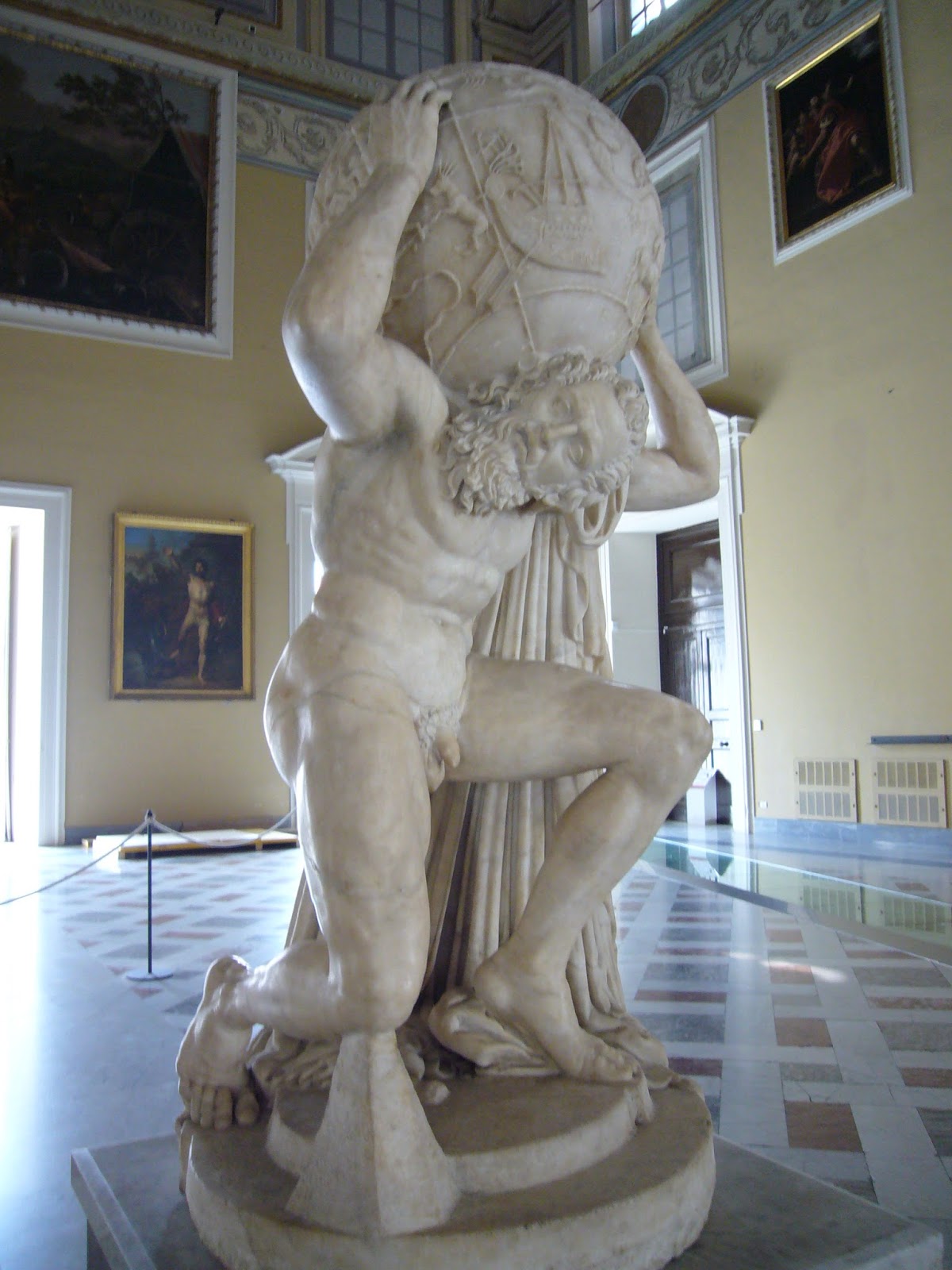
Atlas—the Titan who bore the heavens on his shoulders. He taught farmers and sailors astronomy and caused the heavens to turn. Perseus turned him into the Atlas Mountain with Medusa’s head.

Aura—one of the nymphs of breezes.

Aulos (plural: auloi)—a reed pipe played as accompaniment to poetry, athletic competitions, to keep the rowers on triremes in pace, at sacrifices and dramas. The aulos is the symbol of the muse Euterpe.

Black soup—Spartan staple was made up of boiled pig’s blood, vinegar and salt. The Spartan army mainly ate this concoction. A man from Sybaris, a city infamous for luxury and gluttony, ate the soup and said, “Now I know why the Spartans do not fear death.”

Brazier—an upright metal bowl or box for holding fire or coals. They were used for lighting, heating, and cooking.

Caeadas Chasm—a chasm in the Taygetos mountain range where criminals, traitors, and captives were cast into. Modern archeology has found the remains of adults in the chasm, confirming its use for capital punishment.

Cerberus—the three-headed dog that guards the gates to the Underworld.

Chattel—belonging or possession. Chattel slaves were not people, they were items.

Chiton—a form of clothing worn by men and women in Ancient Greece. Also known as the tunica. The Doric chiton was simple, without sleeves. The cloth was pinned at the shoulders by fibulae for women and only over the left shoulder if the man was doing something strenuous. The fabric was gathered at the waist by a zone for women, zoster for men, also known as a girdle. The women’s chiton fell to the floor, the men’s to just under their knees. Male slaves wore a much briefer garment.

Creeping Disease—ancient name for herpes.

Cyclops—three one-eyed giants who forged Zeus' lightning bolts, Hade's helm of invisibility, and Poseidon's ground-shaking trident in thanks for Zeus' freeing them from Tartaros.
    
· A lawless band of primitive cannibals Odysseus encountered on the isle of Hypereia. To save his men, Odysseus blinded Polyphemus, the son of Poseidon and earned the god's hatred.

Daemon—a spirit, almost always benign. They include nature spirits, ghosts, and deified heroes. Some daemons were dangerous.

Demeter—the goddess of agriculture, grain, and the harvest and mother of Hade's wife Persephone.

Diamastigosis—a ritual flogging of the youths of Sparta held in Artemis Orthia's honor. The Orthia was a wooden statue the Spartans discovered when they invaded Lacedaemonia. The idol inspired madness and blood lust. To propitiate the goddess, men were chosen by lot to be sacrificed on her altar. Later, Lycurgus decreed that all Spartan youths be scourged and thus their blood stained the altar.

Dionysus—the god of wine, parties, and drunkenness. He was often portrayed as an effeminate young man. He dwelt in Delphi during the winter months when Apollo journeys to Hyperborea.

Doric, Aeolic or Ionic—different Greek dialects. The Spartans spoke Doric.


Dryad (plural: Dryades)—nymphs of the trees, woods, mountain forests, and sacred groves. Some were associated with certain trees; others were bound to them, dying when their tree died. Ancient Greek forests were primarily found high in the mountains as most of the lowland forests had been cleared for agriculture. Therefore, the Greeks thought of the Dryades as mountain-dwelling nymphs.

Tuesday, September 29, 2015

Taste in Men

Thanks so much for having me back on your blog, Kayla. I love getting the chance to come hang out here. All those hot Spartans lounging about all over the place! I’m in Heaven. ;)

I’m afraid I can’t claim my new novel, Taste In Men, offers a Mediterranean climate or tanned, powerful warriors (you need Kayla’s books for that) but it does feature a socially awkward IT guy with a fear of commitment!

… I’m not sure I’m really selling this.

Anyway. I’m delighted to finally be able to announce the release of Taste In Men. This novel took me a long time to write, but I’m very proud of it. Taylor Dale is probably the most complicated character I’ve written to date, and who doesn’t love a complex, emotionally damaged main character?

I’m going to stop talking now and let the blurb speak for itself. Thanks again, Kayla!

Blurb
Taylor Dale is terrified of getting tied down. After years working a job he doesn’t like in a city he’s always wanted to leave, he is finally on the verge of starting over. He just has to make it through his two-week’s notice.

A team-building weekend throws a spanner in the works when Taylor meets Charles. Charles is definitely not Taylor’s type, but attraction sparks hard and fast between them. Against his better judgment Taylor decides there might not be any harm in a weekend of no-strings-attached fun.

But Taylor never was very lucky.

One night with Charles threatens to turn his world upside down, if Taylor is willing to let it. In a panic, Taylor pushes Charles away, but distance isn’t enough to stop him wanting the man. Soon, Taylor realizes he has to take a chance and see if there might be a future between him and Charles. But for that to happen he’s going to have to hope Charles will answer his call.

Excerpt
Taylor stood off from the main throng of his colleagues. It was a dreary Friday morning, cold for June and wet although the forecast Taylor had looked up on the Met Office app on his phone suggested conditions were due to improve later in the day. It hadn’t escaped Taylor’s notice that, thanks to the team-building weekend, he was at work earlier than normal. He was trying to distract himself from dwelling on that fact, by people-watching his colleagues.

It said a lot about Taylor’s time at Webb that, despite spending almost every day for the past six years with these people, Taylor knew next to nothing about them. In a way, it was strange to think he might soon never see any of them again, but Taylor didn’t think it likely he would lose sleep over it.

Taylor had never felt like part of a team, but that had been his choice. He took the job at Webb Glasgow when he was eighteen for the simple reason he needed a wage. Working for a company specializing in commercial and industrial building ventilation systems and products was, Taylor was pretty certain, never going to be anyone’s dream job. On the day he signed on the dotted line in his cheap supermarket suit he made himself a promise that in ten years his time at Webb would be a distant memory.

Six years later, more than half a decade of training courses and personal reviews and Continuous Professional Development sessions, he was about to begin cashing in on that promise. Having spent those same six years working nearly every evening and weekend on the project that, only a few months earlier, had paid off in spectacular.

He wondered if the managing directors realized how fucked they were going to be without him. Taylor doubted it. He knew a lot of them saw him as just another corporate lackey willing to jump through any hoop presented to him. That was a reputation earned during his first few years with the company when Taylor had chased every promotion and pay rise even when at times he thought the amount of sucking up might kill him. Taylor thought it was because of that and his fake smile and even faker attitude that the bosses didn’t seem to realize that despite the other colleagues in his office, including Malcolm, Taylor was the IT Department. That wasn’t arrogance on Taylor’s part, it was simple fact, and Taylor wished he could set up a hidden camera to see the chaos he knew was inevitably going to follow his departure.

A lot of sacrifices. That was Taylor’s overwhelming memory of his time at Webb, but then that had been the running theme of his life since his early teens. It didn’t bother him. Not really. Especially not now it had paid off. And he hadn’t gone completely without. Time could always be found for jaunts to Glasgow’s gay bars and nightclubs and there was never a self-imposed deadline so pressing a pretty, pampered twink couldn’t take precedence.
no relationships, no friendships requiring any sort of effort, and no other commitments that he couldn’t get out of in a hurry. Ensuring he never got tied down had always been central to the plan.


Buy Links

Author Bio
Born and raised in bonnie Scotland, Douglas Black writes contemporary MM erotic romance. Welcome to your fantasy.

Author Links

Saturday, September 19, 2015

Andreas and Theron's Tale Continues with Dreamspinner Press

I just signed a contract with Dreamspinner for A Tested Love, the second book in the Apollo's Men Spartan arc! I'm so excited.

Blurb:
Abandoned and once more alone on his homestead, Andreas goes about his life trying to forget the seductive promises Theron made.

Theron is given his first kill list for the annual Krypteia. Part way down the scroll, he finds Andreas' name. Someone must have seen them together. Now that person wants to punish them both and test Theron's loyalty to Sparta at the same time.

Sent to kill Andreas, Theron must find some way to come to terms with his former attraction to the man, before it destroys him as well as Andreas.

The third book in the Spartan arc, A Shared Love, is already in third draft stage. So I know what I'll be doing between editing and promoting A Tested Love.

Monday, September 14, 2015

Vote for A Spartan Love

A Spartan Love has been nominated for Bleeding Heart Blog's Best M/M Romance. If you enjoyed the story, consider going to vote.

Theron is up for Best Book Boyfriend. Please show him some love.

The voting begins today and continues through the 21st. You can vote once daily until the polls close.