Showing posts with label Greek Lexicon. Show all posts

Friday, November 27, 2015

Lexicon for A Tested Love: O-Z


Obolus – coin.

Oboloi – rods used as currency in Sparta. The rods predated the coins with the same name, but the Spartans retained them to discourage the amassing of wealth. I use the different spellings (one singular and the other plural) to differentiate between them for purposes of this novel.

Odysseus—the king of Ithaca. He went to war with Agamemnon against Troy. But on the way home, he angered Poseidon by blinding his son Polyphemus to save his men from being eaten by the Cyclops. As a result, Poseidon did everything in his power to thwart Odysseus’ attempts to return home.
    
· Odysseus was known for being cunning. His epithets in Homer consist of: resourceful, of many resources, of many turns, man of twists and turns, etc.

Olympian gods—there were twelve great gods who dwelt on Mount Olympus. Hades was the king of the Underworld and so not truly considered an Olympian. He is listed here because he is one of the great gods. Hestia was one of the original twelve, but gave up her seat to Dionysus. Other gods and goddesses were considered Olympians, but the twelve became the most well-known.
    
· The gods were anthropomorphisms of important concepts or forces of nature. They were frequently prone to all the flaws that plague humans—anger, greed, lust. They were not omniscient. They only knew what they had seen or been told, allowing mortals to sometimes escape their wrath or even trick them. They were bound by the same social rules as the humans who worshiped them.
    
· Aphrodite—goddess of love, beauty, and desire.
    
· Apollo—god of the light, prophecy, healing, and the arts.
    
· Ares—god of war, violence, and courage.
    
· Artemis—virgin goddess of the moon, the hunt, wilderness, and girls.
    
· Athena—goddess of wisdom, war, and reason.
    
· Demeter—goddess of agriculture, grain, and the harvest.
    
· Dionysus—god of wine, parties, and drunkenness.
    
· Hades—King of the Underworld, god of the dead, and the hidden wealth of the earth.
    
· Hephaestus—crippled god of fire, metalworking, stone working, and volcanism.
    
· Hera—Queen of the Gods, goddess of marriage, women, childbirth, and empires.
    
· Hermes—god of travel, messengers, trade, and thieves.
    
· Hestia—virgin goddess of hearth, home, and cooking.
    
· Poseidon—Earth Shaker, god of the sea, rivers, floods, and earthquakes.
    
· Zeus—King of the Gods, god of the sky, thunder, lightning, and law.

Orpheus—a young man of unsurpassed musical skill.

Otrera—the first queen of the Amazons. She was one of Ares’ lovers.

Paiderastês—boy lover.

Paidonómos, or “boy-herder”—a magistrate charged with supervising the education of the youths in the agōgē. He was in charge of an agélai.

Pan—a half-goat, half-man god of shepherds and flocks. The word panic comes from his name, as he was supposed to inspire the emotion.

Pankration—a sport that combined boxing and wrestling. The only rules prohibited biting and gouging out the opponent’s eyes. In Sparta, even these rules did not apply as it was taught as a hand-to-hand fighting technique. The Spartans were forbade from competing in this sport at the Olympic Games after the deaths of some of their competitors.

Peloponnesian League—also known as the Alliance of Sparta, or the Spartans and their allies.
    
· The league was organized during the 6th century BC, probably as a means to deny the conquered indigenous peoples support from the surrounding poleis.
    
· The Spartans were often willing to help other city-states expel their tyrants. This frequently led to ongoing military and political ties.
    
· Smaller towns, often affiliated with a larger city-state, fearing Argive aggression, requested admittance to the league as protection from Argos.
    
· When Tegea joined the league, the city-state was forced to give up some of her autonomous foreign policy in exchange for Spartan protection. However, this was the turning point in the Spartan/Argive quest for control of the Peloponnesian Peninsula.
    
· Sparta defeated the Argives and became undisputed master of the Peloponnese in 494 BC.
Peloponnesus, or Peloponnese—the rather large southwestern region of Greece separated from the rest of the Hellas by a narrow isthmus at Corinth. Several city-states inhabited this region: Sparta, Corinth, Argos, Messene, Mycenae, Olympia, Pylos and Tegea, to name a few.

Perioikoi, or the “dwellers around”—free non-citizens living in Lacedaemonia. They were frequently tradesmen and merchants—all the activities that a Spartiate could not take part in.

Phalanx (plural: phalanxes)—a rectangular military unit employed by the ancient Greeks. Often equipped with spears and large body-covering shields; although, this distinction wasn’t necessary for the term. It could also refer to any group either on the move, camping, or in battle, regardless of actual weapons. Homer used the term to refer to hoplites fighting in formation.

Phantasma (plural: phantasmata)—the ghosts, or shades of the dead.

Phoinikis (plural: phoinikes)—the iconic scarlet cloak of a Spartan. Spartan warriors were given their first phoinikis when they turned twelve, and a new one every year thereafter.

Polis (plural: poleis)—city/city-state(s).

Pórni̱—means whore or prostitute.

Priapos—a phallic god of fertility, gardens, and the protector of homes. One stroked his phallus to propitiate him and for luck. The Priapeia contains the curses, sexual in nature, he will visit on those who transgress the boundaries he protects.

The Pythia—one of three women who prophesied for Apollo at Delphi. She required the sacred pneuma and a question from a consecrated pilgrim.

Python, earth-dragon—a gigantic primordial serpent born of the earth. Python was appointed to guard the Delphic Oracle by Gaea. Apollo slew the dragon with his arrows and seized the shrine for himself. Another instance of a sky god defeating an earth god/goddess.

Ritual pollution, or bloodguilt—resulted from murder, as opposed to killing someone in battle. The gods might exact a heavy price for such an act, visiting a miasma on anyone who sheltered the murderer until an appropriate sacrifice or sentence was carried out.

Sacred grove—an outdoor religious space, the equivalent of a temple. One profaned such places at their own peril. The gods were jealous of all their prerogatives and defended them with a vengeance.

Sacred pneuma—a gaseous emanation from a cleft in Apollo’s temple at Delphi. The Pythia breathed in the vapors and prophesied. Her mantic words were deciphered by the priests.

Scylla and Charybdis—Greek version of “between a rock and hard place,” were a pair of monsters. Scylla was a six headed monster that ate anyone who came too near her rock. Charybdis was a monster with a gigantic whirlpool. When sailing through the straits of Messina, one had to choose which monster to approach.

Selênê—the goddess of the moon. She rode through the night sky in a chariot drawn by winged horses.

Shield-brother—Theron’s term for his “brothers” in the agélai.

Sirens—monsters, variously described as beautiful or as a mix of woman and bird. Their song was unbelievably sweet and enchanting. They drew sailors to their death on the rocky coast of their island. Odysseus tied himself to the mast of his ship and plugged his sailors’ ears with wax to avoid death by shipwreck.

Sparta—consisted of a collection of unwalled villages. Initially, four in number: Limnai, Kynosoura, Mesoa, and Pitana. The city stretched for no more than 5 miles at its longest. The acropolis was roughly in the center of the four villages and could be seen from all of them. Amykles was added later.
    
· While the polis was fairly small, its territory was large.

Spartiate—the term for a Spartan citizen, a man who has successfully finished the agōgē and entered the standing army. Spartans did not include everyone living in Lacedaemonia. Only the descendants of a Spartan citizen, a Spartiate, could claim such status. And only if they proved themselves as warriors. Helots and perioikoi were not Spartans.

Stele—a stone or wooden post erected for funerary or commemorative purposes.

Strophalos—wheel of Hekate.
    
· Chaldean Oracle – “Labor thou around the Strophalos of Hekate.”
    
· Most sources feel that the Strophalos was a tri-part maze. However, I’ve been unable to find any original (read ancient) sources for this belief.

Syn tai e epi tai!With it or on it!
    
· Attributed to Spartan women sending their menfolk off to battle. Meaning roughly come back carrying your shield (victorious) or on it (dead). But either way, the warriors were not to lose their shield which implied desertion, as one would have to cast the unwieldy thing down in order to flee. Spartans had no use for cowards or deserters.

Syssitia—similar to a military mess. All Spartiates were required to be a member of one and take their meals there daily, unless they had a good excuse. Everyone was required to provide a monthly share from the tribute their klēros produced. If they couldn’t, they lost their place and status as a Spartiate.

Tantalus—an ancient king who offended the gods, possibly by trying to feed them his own son. So he was sentenced to eternity in Tartaros standing in a pool of water under a fruit tree and being able to partake of neither. The origin of the word tantalize.

Tartaros—a deep pit in the Underworld that served as a place of punishment for evildoers and the prison of the Titans.

The Fates, or the Moirai—three implacable goddesses. Klotho spun the thread of life. Lakhesis measured the length of one’s life. Aisa cut it off at the appointed time. The Fates would send the Erinyes, three Underworld goddesses, to punish evil doers.

Themis—the goddess of divine law and order, the traditional laws established by the gods.

Theos (plural: theoi)—the Greek word for “deity, god.”

Tholos—a circular colonnaded temple.

Tyche—goddess of fortune, luck, fate, and chance. In her various attributes, she represented:
    
· Holding a rudder, she guided the affairs of the world as such she was one of the Moirai, or Fates.
    
· Holding a ball, she represented the unsteadiness of fortune, ready to roll either way.
    
· Holding the horn of Amalthea, she symbolized the ample gifts of fortune.

Tympanum (plural: tympana)—a tambourine-like drum.

Willow bark tisane—an infusion, or tea consumed for medical purposes, made from willow bark. Willow bark is a natural source of salicylic acid, a precursor of aspirin. It was used in ancient Greece, Assyria, Sumer, and Egypt to treat fevers and aches.

Wine—in ancient times wine was diluted with water before being consumed. While barbarians drank it uncut with water, this was thought to lead to madness and death.

Xiphos—a common double-edged, leaf-shaped short sword. Most were 2 foot in length or less. They were a secondary, or back-up, weapon intended for use if your spear broke. The blades were short and used for stabbing between shields at your enemy.

Zone, or girdle—a woman’s belt.


Zoster, or girdle—a wide leather belt closed with buckles.

Friday, October 30, 2015

Lexicon for A Tested Love: A-D


Acrocorinth—"Upper Corinth" is the acropolis of Corinth. Helios and Poseidon vied for the patronage of Corinth. Briareus ruled that the Gulf of Corinth belonged to Poseidon and the Acrocorinth to Helios.

Acropolis (plural: acropleis)—means "upper city" and was situated atop a defensible hill. Often the original core of a city, the acropolis housed the temples and palaces of the polis.

Adonis—a prince of Kypros. A young man of unsurpassed beauty, he was beloved of Persephone, Aphrodite, and Apollo. He was killed by a wild boar. Some versions of the story say Ares, in a fit of jealousy, transformed himself into a boar and slew Aphrodite's lover. Others credit Artemis with sending the boar as revenge for Aphrodite causing the death of Hippolyta. Aphrodite turned his blood into the anemone.

Aegis—Zeus made his "thunder-shield" from the skin of the she-goat who nursed him as an infant. The word aigis means both goat-skin and stormy weather. Nothing could be more appropriate for the god of thunder.

Aesop—a fabulist, a story teller specializing in fables. He was born in the 6th century BC and was known as an extremely ugly slave. At some point he earned his freedom. King Croesus of Lydia sent him on a diplomatic mission to Delphi. He insulted the Delphians in some fashion and they repaid him sentencing him to death for a spurious claim of temple theft. He was thrown from a cliff. The gods punished the Delphians by sending a miasma which caused pestilence and famine.

Agōgē—the Spartans’ rigorous education and training program. A fierce and sometimes deadly training all Spartan males underwent from the time of their seventh birthday until they entered the standing army at age twenty. Both girls and boys took part in similar groups; although, military training was not part of the girls’ educations. Both genders took part in dancing, singing, oratory and athletic competitions. In addition, the boys learned stealth, hunting, military training and loyalty to their agélai, syssitia and Sparta.
    
· At age seven, boys were taken from their mother’s home and given to a paidonómos or boy-herder to supervise. The group known as an agélai, or herd, would take the place of their families. They were all “brothers.”
    
· When they turned twelve, each boy would be given only one item of clothing a year, the phoinikis, a scarlet cloak. Anything else they might need they were expected to steal. However, any boy caught stealing was punished by flogging. They were barely fed enough, to teach them how to deal with hunger on campaign and to encourage theft.
    
· Some boys were given an additional honor at eighteen by being chosen for the Krypteia. These warriors, the kryptes, were the elite of their agélai and destined to be officers in the army.
    
· At age twenty, the boys joined the reserves. They would now be members of the Spartan army until they retired at age sixty.
    
· Boys who failed at any point did not become Spartiates/Spartan citizens.

Agélai, or herd—a group of boys of similar age going through the agōgē.

Agora—"gathering place" or "assembly", was the central place for athletic, artistic, spiritual, and political life of the Greek city-state. During early times, freemen gathered here for military duty or to hear the decrees of the ruling kings or council. Later, the agora became a market place as well. The Roman equivalent word is forum.

Amphora (plural: amphorae)—a vase-shaped ceramic container with two handles on either side of a long narrow neck. Most taper to a pointed base to allow them to be stored upright by embedding them in sand or soft ground. In kitchens and shops, racks held the amphorae.

Amykles—a village south and west of the original four unwalled villages making up the polis of Sparta. While not one of the originals, it was later added. The village contained the sacred precinct of Apollo Hayakinthios and the tomb of the Spartan Prince Hyacinthus, one of Apollo’s lovers.

Andron— dining room for the men. A small hearth in the corner is the family hearth/altar to Hestia. Once it would have been the fire that meals were cooked upon, now it is the symbol of the family's domestic worship. Offerings of meat and drink are made to Hestia at every meal.

Anemoi—the winds. Sometimes represented by gusts of wind, winged men, or even horses. Each was associated with one of the cardinal directions and a season. In their equine form, they drew Zeus' chariot and fathered immortal steeds. The Spartans were said to sacrifice a horse to the winds on Mount Taygetos.

Apollo Hayakinthios—a deity only worshipped in Sparta. The deity Hyakinthos predated the arrival of Apollo and was subsequently subsumed into the Greek deity. The epithet Hayakinthios partially refers to the previous deity and also Prince Hyacinthus.
    
· It was not uncommon for the invading Greek deities to take on aspects of a previous deity and even use the fallen deity’s name as an epithet. These combined gods were local and considered to be merely aspects of the primary god.
    
· The story of Prince Hyacinthus’ death is possibly the ritualization of human sacrifice.

Apophorá—the portion of a helot's harvest that is owed to his Spartiate, ranging from half of everything his klēros produced to a set amount. The portion probably varied over the centuries.

Apotropaic magic, or warding magic—the use of gestures, phrases, or amulets to ward off some unpleasant event, or more specifically in the case of the Greeks, the evil eye. Most people have seen the eyes painted on the prow of the ancient Greek triremes. This is a form of apotropaic magic designed to ward off disaster.

Apothetae or “deposits”—deformed or imperfect babies that were exposed soon after birth. Exposure of infants was not uncommon in the ancient world. Oedipus is a famous example.

Archon—ruler or lord. The title could refer to anything from the ruler to a public official to "master of the tables" in a syssitia.

Argos—an ancient Mycenaean settlement on the Argolid plain. The inhabitants, Argives, were Sparta's rivals for control of the Peloponnesus.

Artemis Orthia—another instance of a Greek deity taking on aspects of a previous deity. Orthia refers to a wooden idol found by the Spartans. The older goddess required human sacrifices. When she was subsumed as an aspect of Artemis, her bloodthirsty nature changed. Artemis is considered the protector of children in Sparta, primarily girls, but boys also benefited from her protection.
    
· The sanctuary of Artemis Orthia became a place where the young warriors were tried and tested. Every youth was flogged until they bled, offering their blood in a less fatal fashion. It became such a spectacle that an amphitheater was erected for spectators to watch.

Atê—the goddess of mischief, delusion, ruin, and folly. She often led men to their ruin. At Hera’s instigation, Atê has even tricked Zeus.

Athena Poliachos—the patron goddess of Sparta. The epithet Poliachos means protector of the city.

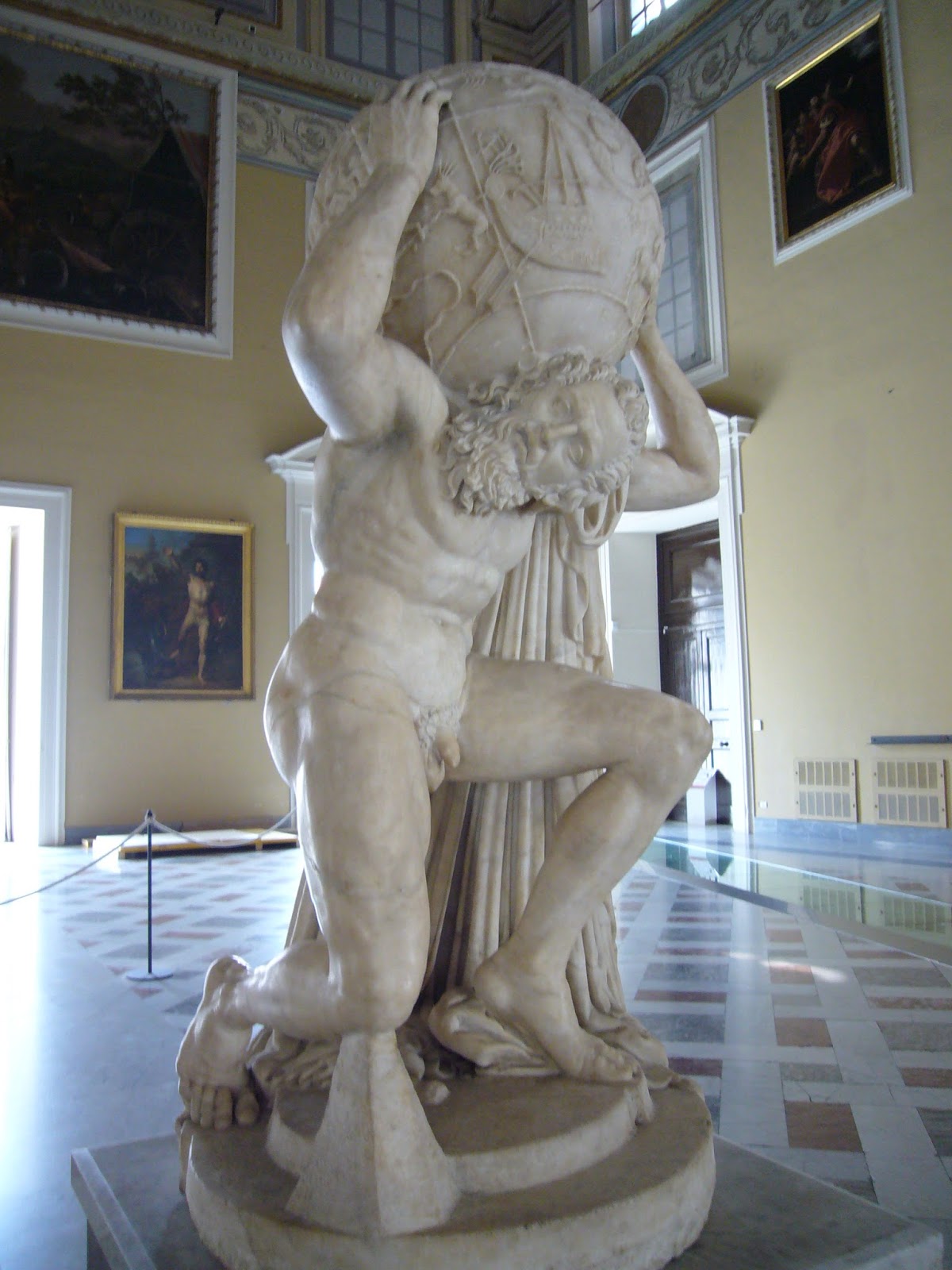
Atlas—the Titan who bore the heavens on his shoulders. He taught farmers and sailors astronomy and caused the heavens to turn. Perseus turned him into the Atlas Mountain with Medusa’s head.

Aura—one of the nymphs of breezes.

Aulos (plural: auloi)—a reed pipe played as accompaniment to poetry, athletic competitions, to keep the rowers on triremes in pace, at sacrifices and dramas. The aulos is the symbol of the muse Euterpe.

Black soup—Spartan staple was made up of boiled pig’s blood, vinegar and salt. The Spartan army mainly ate this concoction. A man from Sybaris, a city infamous for luxury and gluttony, ate the soup and said, “Now I know why the Spartans do not fear death.”

Brazier—an upright metal bowl or box for holding fire or coals. They were used for lighting, heating, and cooking.

Caeadas Chasm—a chasm in the Taygetos mountain range where criminals, traitors, and captives were cast into. Modern archeology has found the remains of adults in the chasm, confirming its use for capital punishment.

Cerberus—the three-headed dog that guards the gates to the Underworld.

Chattel—belonging or possession. Chattel slaves were not people, they were items.

Chiton—a form of clothing worn by men and women in Ancient Greece. Also known as the tunica. The Doric chiton was simple, without sleeves. The cloth was pinned at the shoulders by fibulae for women and only over the left shoulder if the man was doing something strenuous. The fabric was gathered at the waist by a zone for women, zoster for men, also known as a girdle. The women’s chiton fell to the floor, the men’s to just under their knees. Male slaves wore a much briefer garment.

Creeping Disease—ancient name for herpes.

Cyclops—three one-eyed giants who forged Zeus' lightning bolts, Hade's helm of invisibility, and Poseidon's ground-shaking trident in thanks for Zeus' freeing them from Tartaros.
    
· A lawless band of primitive cannibals Odysseus encountered on the isle of Hypereia. To save his men, Odysseus blinded Polyphemus, the son of Poseidon and earned the god's hatred.

Daemon—a spirit, almost always benign. They include nature spirits, ghosts, and deified heroes. Some daemons were dangerous.

Demeter—the goddess of agriculture, grain, and the harvest and mother of Hade's wife Persephone.

Diamastigosis—a ritual flogging of the youths of Sparta held in Artemis Orthia's honor. The Orthia was a wooden statue the Spartans discovered when they invaded Lacedaemonia. The idol inspired madness and blood lust. To propitiate the goddess, men were chosen by lot to be sacrificed on her altar. Later, Lycurgus decreed that all Spartan youths be scourged and thus their blood stained the altar.

Dionysus—the god of wine, parties, and drunkenness. He was often portrayed as an effeminate young man. He dwelt in Delphi during the winter months when Apollo journeys to Hyperborea.

Doric, Aeolic or Ionic—different Greek dialects. The Spartans spoke Doric.


Dryad (plural: Dryades)—nymphs of the trees, woods, mountain forests, and sacred groves. Some were associated with certain trees; others were bound to them, dying when their tree died. Ancient Greek forests were primarily found high in the mountains as most of the lowland forests had been cleared for agriculture. Therefore, the Greeks thought of the Dryades as mountain-dwelling nymphs.

Friday, July 11, 2014

Spartan Myths - All Slaves Are Alike

That is mostly true in the ancient world. As Lisa Henry pointed out, Roman slaves were chattel. Meaning they were property, an item to be owned, not quite human any more.

Things in Sparta were a bit different. Did I hear someone sigh and mutter, "Of course"?

I did warn you, even the other Greeks thought the Spartans were weird. But don't say it to their faces. The biggest badasses on the block can be as weird as they want to be.

So Spartan slaves. They more or less were owned by the polis (city-state) of Sparta and were comprised of the previous landowners. When the Dorian tribe that later became known as the Spartans invaded Lacedaemonia, they enslaved the previous inhabitants.

This new class of slaves, called helots, was unprecedented in the rest of the world. First they couldn't be bought or sold at the whim of their "master" because they didn't really have a master. Helots belonged collectively to the state not unlike mediaeval serfs.

Most were assigned to a plot of land (klēros). They were expected to give a set portion of the bounty of their fields to the Spartiate (Spartan citizen, i.e. adult male) the land was allotted to. Almost as if the land provided everything the Spartan needed, including the wherewithal to tend itself.

As long as their quotas were met, they were given an amazing amount of leeway in their lives.

Secondly, Helots were allowed to marry as they chose and raised their children with little to no fear they could be sold at any time, unlike chattel slaves. Some of the agrarian helots found themselves performing more traditional roles in Spartiate households. But even there they were not subject to some of the harsher realities of slavery.

But it wasn't all sunshine and roses.

One of the few things the Spartans worried about was a helot revolt. Helots vastly outnumbered the dwindling Spartan population. So in an effort to keep the helots subdued and "cut off the head of the snake", every autumn, the ephors declared war on the helots. This meant that a Spartan could kill any helot without risk of bloodguilt/ritual pollution.

This usually translated into some of the more promising young warriors in training being sent into the countryside with just a knife and the clothing on their back. The youths (18-19 years old) known as kryptes were expected to use stealth to steal what they needed to survive, spy on the helots and stalk their prey.

Any helot caught outside after dark was killed, as were any helots who were respected enough to be considered possible leaders for a revolt. The young men also targeted the best and the strongest as a way to show off their training.

Through terrorization, some but not all revolts were kept in check.


So the helots had in some ways the best life a slave could hope for in the ancient world, but it came at an equally terrible price.

Wednesday, April 11, 2012

Greek Lexicon for Alexios' Fate


Cast of Characters
Prince Alexios of Dicaea: A prince of Dicaea
     Αλεξιος, a derivative of Αλεξις, which meant "helper" or "defender", derived from Greek αλεξω (alexo) "to defend, to help."

King Demetrios of Dicaea: Alexios’ father and king of Dicaea
     Δημητριος, derived from the name of the Greek goddess Demeter.

Galen: Alexios’ slave
     Γαληνος means "calm" from Greek γαληνη (galene).

King Lykos of Aenus: Visiting king of Aenus
     Λυκος, means "wolf.”

King Philon of Doriscus: Visiting king of Doriscus
     Φιλων, derived from φιλεω (phileo) "to love.”

King Theocritus of Abdara: Visiting king of Abdara
     Θεοκριτος, means "judge of god.”

King Andronikos of Maroneia: Visiting king of Maroneia
     Ανδρονικος means "victory of a man.”

Cyrus: The prophet known as the Voice of Apollo, traveling with King Lykos to Delphi
     Κυρος (Kyros), the Greek form of the Persian name Kūrush, which may mean "far sighted" or "young."

Phoebus Apollo: The Greek god of the sun, also known as the Lord of Light
     Απολλων

Muses: nine goddesses, who embody the arts and inspire the creation of song, theater, writing, traditional music, and dance.
     Calliope: The muse of epic poetry, pictured with a writing tablet.
     Clio: The muse of history, pictured with scrolls.
     Erato: The muse of love poetry, pictured with a cithara (lyre).
     Euterpe: The muse of song and elegiac poetry, pictured with an aulos (flute).
     Melpomene: The muse of tragedy, picture with a tragic mask.
     Polyhymnia: The muse of hymns, pictured veiled.
     Terpsichore: The muse of dance, pictured with a lyre.
     Thalia: The muse of comedy, pictured with a comic mask.
     Urania: The muse of astronomy, pictured with a globe and compass.

Ippos: Means horse, Poseidon’s sacred animal.

Taurus: Means bull, Zeus’ sacred animal.

Halys: a faun/pan, one of Pan's descendants.

Greek Lexicon
Agora, meaning "gathering place" or "assembly", was the central place for athletic, artistic, spiritual, and political life of the Greek city-state. During early times, freemen gathered here for military duty or to hear the decrees of the ruling kings or council. Later, the agora became a market place as well. The Roman equivalent word is forum.

 Amphora (plural: amphorae or amphoras): a vase-shaped ceramic container with two handles on either side of a long narrow neck.  Most taper to a pointed base to allow them to be stored upright by embedding them in sand or soft ground.  In kitchens and shops, racks held the amphorae.

Chiton: a form of clothing worn by men and women in Ancient Greece. Also known as the tunica. The Doric chiton was simple, without sleeves. The cloth was pinned at the shoulders by fibulae for women and only over the left shoulder if the man was doing something strenuous. The fabric was gathered at the waist by a zone or girdle. The women's chiton fell to the floor, the men's to just under their knees. Male slaves wore a much briefer garment.

Greek Warrior Kit: The richer upper-class warriors had a bronze breastplate of the bell or muscled variety, a bronze helmet with cheekplates, a shield, as well as greaves and other armor. Most warriors carried a spear and short sword. Many warriors used javelins, especially when in chariots. Bows were more commonly used to defend the walls of a city, being considered cowardly on the field of battle.

Hiereus (plural: hierei): the word for "priest".

 Hubris means extreme haughtiness, pride or arrogance. Most commonly used to describe the actions of those who challenged the gods or their laws, especially in Greek tragedy, resulting in the protagonist's fall. Hubris was considered the greatest crime of ancient Greek society. The person performs some act of folly due to their overweening pride, usually resulting in their downfall or some fatal retribution (Nemesis).

Iamos was the son of Evadne and Apollo. Evadne, one of Poseidon's daughters, was raised by a local king. Ashamed to be with child, Evadne exposed the child at birth in a patch of violets. Her stepfather discovered the child was the son of a god and made her go reclaim the baby. The boy was named Iamos (from ίον, "violet"). When Iamos grew up, he invoked Poseidon and Apollo, asking them to reveal his destiny. Apollo gave him the gift of prophecy and sent him to Olympia to found the Iamidae line of priests.

Laws of xenia, a specific code of guest-friendship, dictated how to care for a guest. Zeus was the guardian of strangers and the enforcer of xenia.

Ienai means go, start or begin.

 Mentoring or Pederasty in ancient Greece was a social custom likely originating as a rite of passage associated with entering military training and the religion of Zeus at a boy's coming of age. As such, it was likely a rite of passage. The practice was central to the homosocial Greek culture, which included athletic and artistic nudity, delayed marriage for aristocrats, symposia, and the social seclusion/exclusion of women.

The practice almost certainly involved sexual activity between the mentor and the young man, usually in his teens or early twenties. The extent would vary with local custom and individual inclination. The mentor, being older and socially superior, was the "penetrative" partner. In the case of mentoring, this almost exclusively referred to intercrural sex, where the penis penetrates between the thighs of the youth.

The erômenos, or "beloved", is the passive or subordinate partner. The youth would be of an age when an aristocrat began his formal military training, around fifteen to seventeen and extending up until the youth was in his twenties, or in some cases even thirty.

The mentor, or erastes, courted the young man with gifts. He was expected to show that his interest wasn't merely sexual. The youth was not to submit too easily. If more than one man courted him, he was expected to show discretion and pick the nobler man.

Nereus was a minor sea god associated with the Aegean Sea. He had fifty daughters, the Nereids, and a son, Nerites. His daughter Thetis is Achilles' mother. Another daughter, Amphitrite, was Poseidon's queen. Nerites was the charioteer and beloved of Poseidon. (Poseidon's wife and lover were siblings.) Nerites was turned into a shellfish for his hubris after challenging Helios to a chariot race and losing.

Omphalos, also known as the Navel of the World, is a carved stone erected at Delphi as part of the temple complex to Apollo. The stone was placed where the two eagles sent by Zeus to fly from the ends of the world to find the center, or the navel, met.

The Navel was guarded by Python for his mother Gaia. Apollo slew Python, the serpent, and took Delphi, making the oracular site his own. This is an example of the earlier earth deities, frequently female, being overthrown by the new sky deities, usually male. The place name Pytho was given to site where Python was slain.

Polis: city/city-state

Pythia, the Oracle of Delphi, was a mantic priestess at the Temple of Apollo. The title derived from the place name Pytho.  The post was often shared amongst a triad of priestesses. The women varied from learned aristocrats to unlettered peasants. The Pythia gave her prophecies while perched atop a tripod.

The oracle only functioned during the nine warmest months of the year while Apollo resided in Delphi. He returned each year during the spring on the 7th day of Vysios, his birthday. The Pythia was required to undergo monthly purification rites on the 7th day of each month thereafter.

Stoas were covered walkways or porticos open to the public. They often had small stores down one side of the building with an open portico lining the other side, offering shelter to shoppers and anyone else who was in the agora.

 Theos: the Greek word for "deity, god"

 A trireme (from Latin triremis, literally "three-oarer") was a type of galley, a warship that was used on the Mediterranean. The vessel was named for the three rows of oars on each side, manned with one man per oar. The three tiers of oars required careful coordination and much practice so as not to tangle in one another. The Greek ships were manned by freemen/warriors unlike the galleys of the Romans. As a ship it was fast and agile, and became the dominant warship in the Mediterranean. They also had one large square sail, a bronze clad prow with a pair of eyes painted on both sides. The eyes were intended to see that the ship stayed on course and to ward off any evil.


Greek Days of the Week:
The Greeks adopted the Babylonian seven-day planetary week. They substituted the names of their own gods: Ares, Hermes, Zeus, Aphrodite, and Chronos. Sunday is quite literally sun-day. Monday is moon-day.
Sunday
Monday
Tuesday
Wednesday
Thursday
Friday
Saturday
hemera
helio/u
hemera
selenes
hemera
Areos
hemera
Hermu
hemera
Dios
hemera
Aphrodites
hemera
Khronu

Mythos
Hera, Athena, and Aphrodite vied for a golden apple inscribed with "For the fairest." Zeus refused to be drawn into the contest and sent the goddesses to Paris to judge. After each goddess attempted to bribe him, the foolish prince chose Aphrodite in exchange for the most beautiful woman in the world as his wife.

The fall of Troy was orchestrated by Hera and Athena as retribution for Paris' choice of Aphrodite as "the fairest." Aphrodite's gift, Helen of Troy, couldn't have been more suited to the task of bringing Troy down if she had been chosen for that purpose.

Due to her beauty, Helen had been courted by all the eligible rulers of the Greek city-states. She was abducted by Theseus and rescued by the remainder of her suitors. The kings all then swore to protect her and the husband she chose from further abductions. She wed Menelaus, Agamemnon's brother. When Paris abducted her from her husband, the Greeks had a holy reason for war. Paris had broken Zeus' laws of hospitality. Plus by her abduction, all the kings of the Greek city-states were held by their oath to retrieve her.

Agamemnon need only remind everyone of their oath and Paris' impious behavior. A huge armada was launched, but the winds were unfavorable. Informed he would have to sacrifice his daughter Iphigenia to receive favorable winds, Agamemnon sent word that his wife Clytemnestra should bring their daughter to be wed to Achilles.

Iphigenia is portrayed as a girl who went to her death bravely once she knew what her fate was. Clytemnestra was not as accepting. When Agamemnon returned from Troy, triumphant, she slew him in his bath for his hubris and the murder of their daughter. The Fates did not punish her because she was not blood related to her husband.
***
Persephone, the daughter of Demeter, was abducted by Hades and taken into the Underworld to be his queen. Demeter petitioned Zeus for the return of their daughter. Even though Persephone was Zeus' daughter, marriage by abduction was common, even for the gods. When Zeus did not demand his brother return Persephone, Demeter used her attributes to coerce him.

Demeter, the goddess of grains, fertility, and harvest, refused to let any plants grow. Soon animals and people were dying. The humans petitioned the gods to succor them. Zeus was forced to go to his brother Hades and ask for Persephone's return.

Persephone had been pining for her mother and the open air. She wouldn't eat and had become pale.
Hades didn't want to give up his queen. Before he returned Persephone, Hades pressed her to eat something. She ate six pomegranate seeds. When Zeus discovered that she had accepted Hades' hospitality, he had no choice but to decree she remain with her husband for six months out of the year.

Demeter was not pleased, but could do nothing further. So for six months out of the year, the earth is fruitful and green, but for the other six months Demeter mourns her daughter and the earth does likewise.
***
Ganymede was a beautiful young man who caught Zeus' eye. Zeus took the form of an eagle and abducted the boy, taking him back to Mount Olympus. Ganymede was given immortality, unfading youth, and was made Zeus' cupbearer.

Zeus gave the boy's father the gift of horses "such as carry the immortals." His father was pleased by the gift as well as the boy's new station as Zeus' cupbearer and erômenos. Hera was jealous of her rival for Zeus' affections; the only one Zeus ever showed any attachment to. However, even the queen of the gods had to respect the relationship. She never tried to punish Ganymede like she did with all of Zeus' other lovers.

The story of Ganymede and Zeus illustrates the institution of pederasty and gives it divine validation.
***
Cassiopeia, the queen of Ethiopia, bragged that her daughter Andromeda was more beautiful than all the Nereids, the sea nymph daughters of the minor sea god Nereus. Poseidon's queen was one of the Nereids, Amphitrite. Poseidon became angry and sent a sea monster to destroy the kingdom. In an effort to save their kingdom, they consulted an oracle who told them they must sacrifice their daughter to the sea monster.

Andromeda was chained to a rock near the sea and left to her fate. Perseus was traveling through Ethiopia at the time. He saw Andromeda's plight and slew the sea monster. He carried her off and married her.

Poseidon was not pleased that Cassiopeia had not been punished. He could do nothing about Perseus who was one of Zeus' sons, so instead he tied Cassiopeia to a chair that was frequently used for torture and placed her in the sky as a constellation that spends half its time upside down.
***
The queen of Thebes, Niobe, had fourteen children, seven boys and seven girls. She boasted unwisely that she had more children than Leto, who only had Apollo and Artemis. Before she could repent of her hubris, Apollo and Artemis slew her children with arrows. In her grief, she turned to stone and the rock still weeps for her lost children.